What is Accounting Automation?
Accounting automation is the process of using software to perform manual and repetitive tasks within accounting functions. These typically include invoice processing, expense management, accounts payable, accounts receivable and overall accounting book reconciliations.
For example, a software company may receive monthly vendor invoices and needs to collect monthly fees from enterprises for providing their software as a service. Here, an accounting automation software may be used to automate 2 way matching/ 3 way matching for accounts payable bills and sending automated email reminders to customers for clearing receivable invoices. The accountant or finance manager basically finds the manual work already done, with only final actions required from a decision maker’s standpoint.
The goal of accounting automation is to reduce manual labour in functions, especially those that are repetitive and time consuming. Such areas are most suitable for automation, with the benefits of time and cost saving, more agile accounting and finance teams and more creative job functions.
Key Components of Accounting Automation Process
Here are the key components essential of accounting automation:
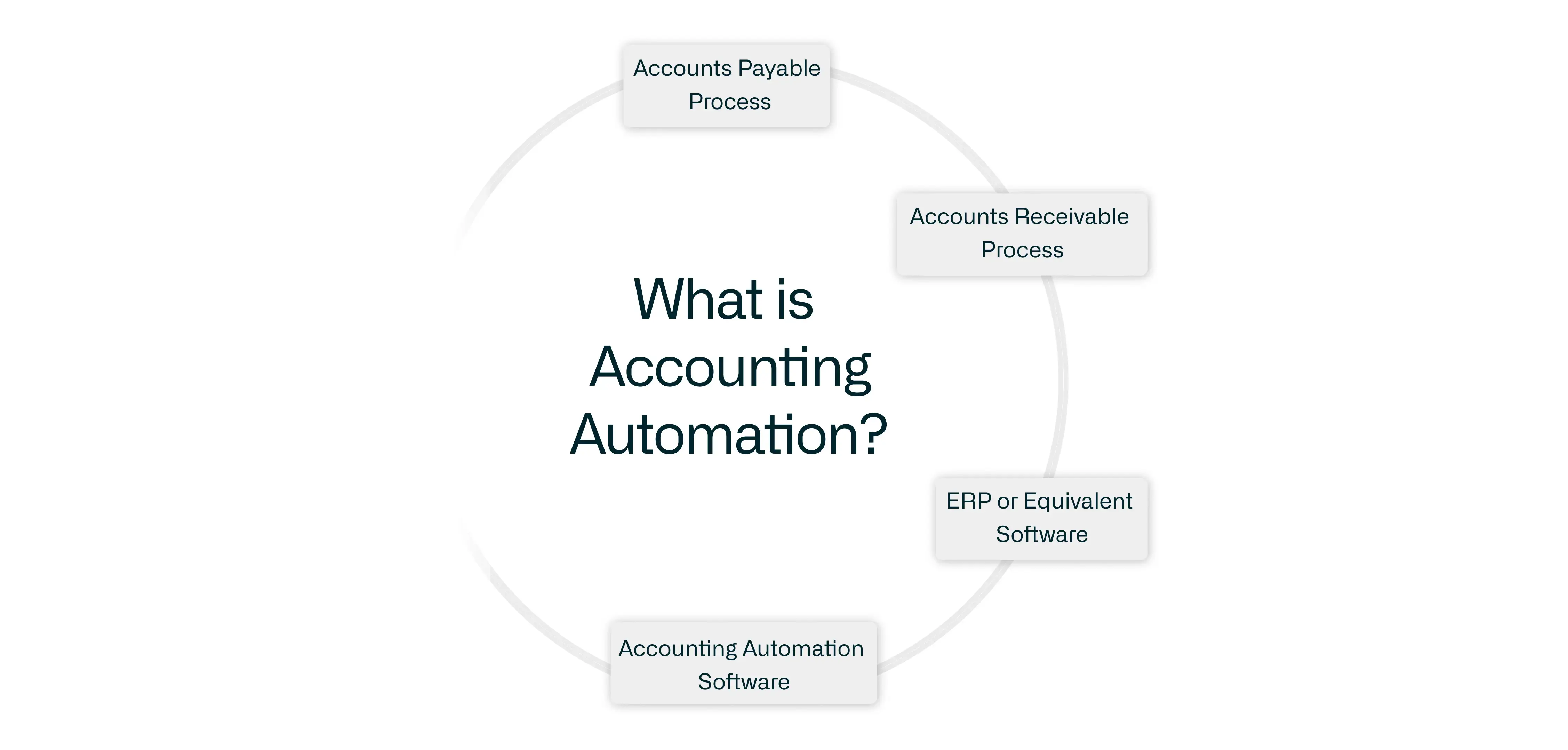
Accounting automation implementation depends on several key components for effectiveness:
- Accounts payable process
A well defined accounts payable process is key to identifying tasks within it that are manual, repetitive and doesn't involve human creativity or decision making. This includes defining methods for invoice processing, expense management and bank reconciliations.
For example, the most obvious task to automate is invoice processing where vendor invoices are matched with internal documents and are approved or rejected with clear reasons. This is easily executed automatically by platforms like Rever. Furthermore, even approval workflows where sign-offs are required by respective team members can also be automated.
Related: What is Accounts Payable Automation?
- Accounts receivable process
Accounts receivable includes any cash inflow that is due for the company from customers through product/ service sales. Setting a proper process to reach out to customers, send reminders and ensure that your books are updated once the cash is received.
Related: What is Accounts Receivable Automation?
- ERP or equivalent software
Enterprise ERPs/ accounting software are a data pool with all essential information required to initiate any automation of tasks. This is key for any automation software like Rever to tap into and feed data back to these systems.
- Accounting automation software
And finally, an automation software is needed to perform automated tasks and generate results for accountants/ financial decision makers. Automation does not mean that every aspect of a department is automated, that can be risky since a system error can wreak havoc to enterprise finance. Instead, automation platforms like Rever keep everything ready for human eyes to see and take the final call.
For example, in accounts payable automation, everything till invoice record matching and sending approval requests to team members is done by the software, but the final call to make the payment is left to the accountant.
Benefits of Accounting Automation
Automating certain accounting tasks before final decision making provides benefits such as cost and time saving, efficient processes, huge reduction in manual errors etc.
Let's dive deeper into these benefits for enterprises:
- Time and cost saving
Automating account processes means that these specific areas no longer require human input to a large extent. Human decision making will still remain key, especially pertaining to key impactful areas, however, a bulk of the manual work is taken care of by the automating software. This time saving itself feeds into cost saving, plus the added bonus of saved resource allocation.
- Efficient accounting
One of the prime benefits of automation is the reduction in manual entry and human error in matching and calculation tasks. This in turn makes the entire accounting process less prone to errors, while getting a boost in efficient time management. Platforms like Rever work in real-time and instantaneously, with invoice processing happening in seconds.
- Much less laborious tasks for humans
Labour intensive tasks are dreaded by all teams, and accounting has it in bulk. From pulling all types of records, matching them line by line, tallying numbers, performing calculations, doing manual entry of all key items etc. With automation taking care of all these key items and accountants being in charge of the final decision making, this makes for a much more attractive job profile and work culture.
- Increased vendor satisfaction
Vendor relationships are a key part of enterprise functioning and hold their importance in ensuring optimal operations. The best way to keep vendors happy after they meet your expectations, is to ensure that their invoice gets processed on-time and without errors. This simple approach goes a long way in making sure that relationships with trusted vendors remain healthy and they can prioritize your supply needs as and when they arise.
- Effective order-to-cash
A cornerstone aspect of accounting is accounts receivable, wherein, the accounting team, alongside the sales team, works to ensure that order invoices from customers are cleared on time and in the amount already agreed upon. This is key for healthy enterprise cash flow management and financial projections. With accounting automation tools, tasks like customer payment reminders, document matching, system entry etc, are all taken care of by the software automatically, ensuring on-time customer communication, data on customer actions and clear visibility into pending invoices.
Related: What is Finance Automation?
Best practices for accounting automation in 2026
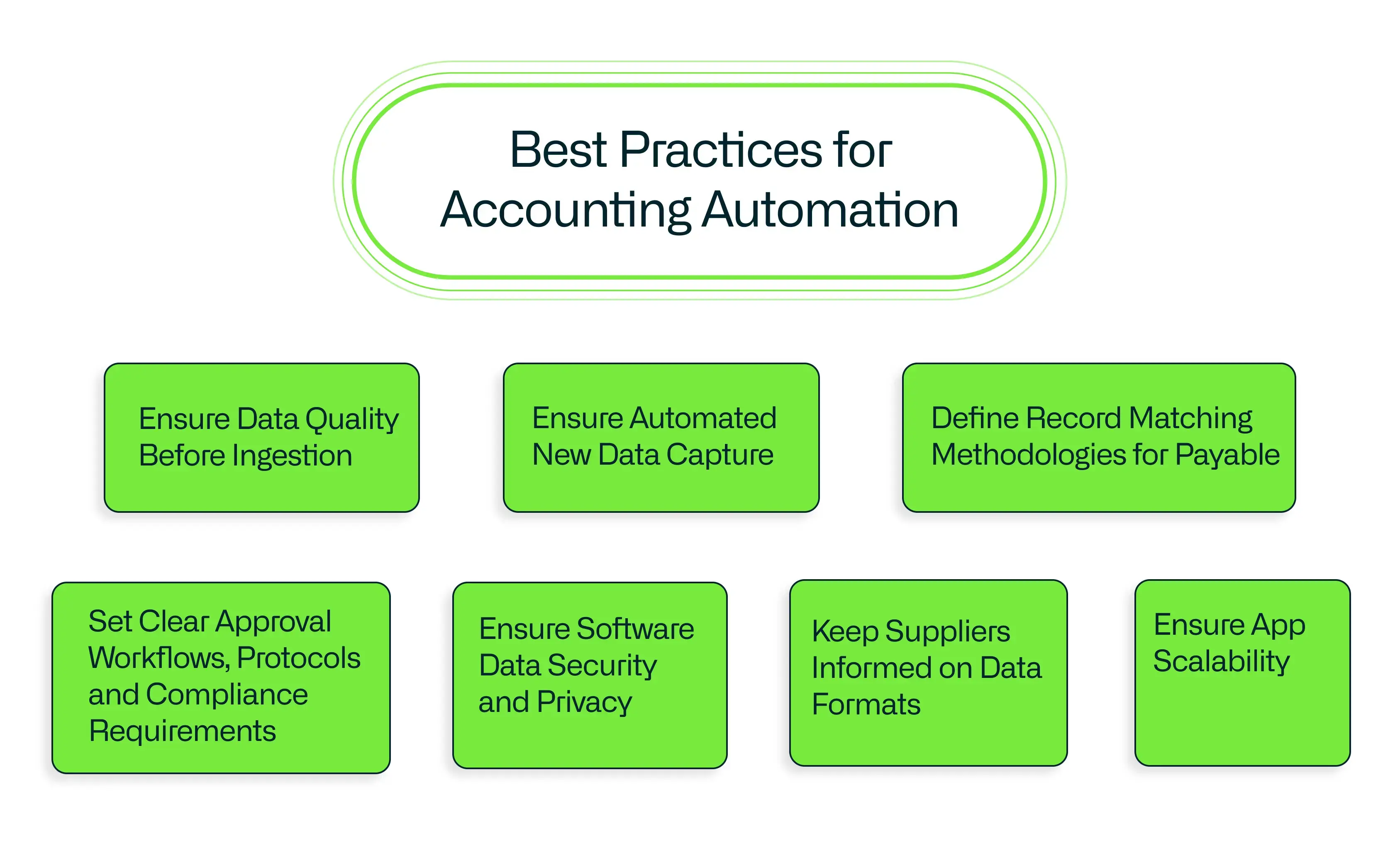
- Ensure data quality before ingestion
The output of accounting automation is dependent on the initial input of data into the system for ingestion and processing. Ensuring accuracy and cleanliness of this data is key to get desired and accurate outputs from the automation software.
For example, for effective 3 way matching in accounts payable, the initial data fed into the system needs to include accurate data fields in the purchase order. If certain data entries are wrong, the software may return an error or mark a record mismatch on the vendor side.
- Ensure automated new data capture
After initial data ingestion of past records, you shouldn’t have to feed any new data into the automation software, and should be capable of capturing vendor invoice emails, purchase orders, GRNs etc, to perform necessary tasks.
- Define record matching methodologies for payable
Accounts payable record matching is one of the key functions of any effective accounting software. For the software to do its job, the team needs to ensure that a document matching methodology, be it 2 way or 3 way match, should be well incorporated into the operations of the company.
For example, all employees should be made aware of the required documentation and formats for raising GRNs after delivery of services/ products, such as using the right template, filling in required details, sending them to the right email addresses etc.
- Set clear approval workflows, protocols and compliance requirements
Software like Rever have advanced approval workflow automation features, but for them to work, there has to be a clear internal alignment and training. It shouldn't be that an invoice is left unapproved because someone in the approval structure missed out, even though the software prompted them for the approval.
Another common issue to look out for is missing out on updating the approval structure in the software when an employee exits the company, or moves away from an existing role within the firm. To avoid such issues, proper inter-department cooperation is required.
- Ensure software data security and privacy
Ensuring that any enterprise software has necessary certifications, sign-in security protocols, encryptions and government-mandated data processing compliances, is vital to ensure that they do not become a liability. Check for all documentation on the company's website and also ask sales representatives to provide copies to you if needed.
Ensure a clear NDA exists between the enterprise and the automation software vendor. Finance is a sensitive area and all measures should be taken to ensure industry standards of data security and data privacy.
- Keep suppliers informed on data formats
Enterprise vendors/ suppliers depend on the company to inform them about required compliances and protocols in invoice generation. It is therefore the job of the vendor relationship managers to ensure that all vendors have the necessary knowledge and understanding of the formats and data fields required, to ensure that the automation software can scan and process them.
- Ensure app scalability
As enterprises grow, their software stack should have the capability to scale without performance issues. This applies even more to finance automation tools, which are affected by expansion across any team within the organization.